
Home » Applications » 100% BTEX Emission Control Systems
Benzene is a known carcinogen and a regulated hazardous air pollutant commonly released as a by-product of glycol-based natural gas dehydration systems. As environmental regulations tighten and compliance thresholds become more stringent, operators require reliable, proven technologies to control BTEX emissions at the source.
GasPro provides industry-leading BTEX emission control systems that significantly reduce – or fully eliminate – benzene, toluene, ethylbenzene, and xylene emissions from glycol dehydrators.
Glycol dehydrators are widely used to remove water vapor from natural gas streams. During this process, small but regulated quantities of:
Regulatory agencies, including the Alberta Energy Regulator (AER), require operators to reduce or eliminate these emissions to meet environmental compliance standards.
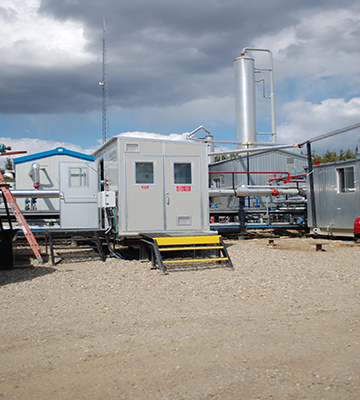
GasPro offers multiple engineered solutions depending on emission levels and site requirements.
Designed to significantly reduce BTEX emissions by condensing liquid droplets from the still-column vapour stream before release.
Provides enhanced liquid recovery and improved emission reduction performance compared to standalone condenser systems.
For facilities requiring the complete elimination of benzene emissions, GasPro’s BTEX Vapor Recovery Unit (VRU) delivers a fully closed-loop solution.
The GasPro BTEX VRU captures emissions directly from the glycol dehydrator still column and processes them through a controlled recovery system:
This process:
Unlike partial solutions that achieve 95% or 99% reduction, GasPro’s BTEX VRU is recognised as a 100% emission elimination solution and is approved by the AER as a compliant technological system.
Because it provides full capture:
GasPro’s 100% BTEX Emission Control Systems provide a proven, regulator-approved solution for operators who require complete benzene elimination – not partial reduction.
Contact GasPro today to evaluate your glycol dehydrator emissions and implement a fully compliant BTEX recovery solution.
BTEX refers to benzene, toluene, ethylbenzene, and xylenes – hazardous air pollutants commonly associated with hydrocarbon processing.
Benzene is classified as a carcinogen and poses serious health risks even at low exposure levels. Regulatory bodies strictly limit benzene emissions.
During gas dehydration, aromatic hydrocarbons absorbed in glycol are released from the still column during regeneration.
It provides a closed-loop, AER-approved 100% capture solution, eliminating the need for further study requirements associated with partial-reduction systems.
Yes. GasPro systems can be integrated into existing glycol dehydration units with engineered customisation.
Yes. Condensed hydrocarbons are recovered, and separated gas is reintroduced into the system, improving operational efficiency.