
Home » Applications
Gaspro casing gas compression packages are used for individual oil well optimization. As the hydrocarbon products flow into the well from the formation, associated gas breaks off from the solution and starts collecting in the casing. This causes pressure to build up in the casing which creates back pressure on the formation, thus restricting the flow of hydrocarbons into the well. This problem was commonly dealt with by either venting or flaring this gas, but both these methods result in GHG emissions and loss of a valuable energy source. Gaspro compression’s casing gas compressor packages solve this problem by taking the gas from the casing, compressing it, and putting it back into the production line. As a result, there is less backpressure on the formation and more hydrocarbons flow from the formation into the well, while at the same time, valuable energy resources are conserved.
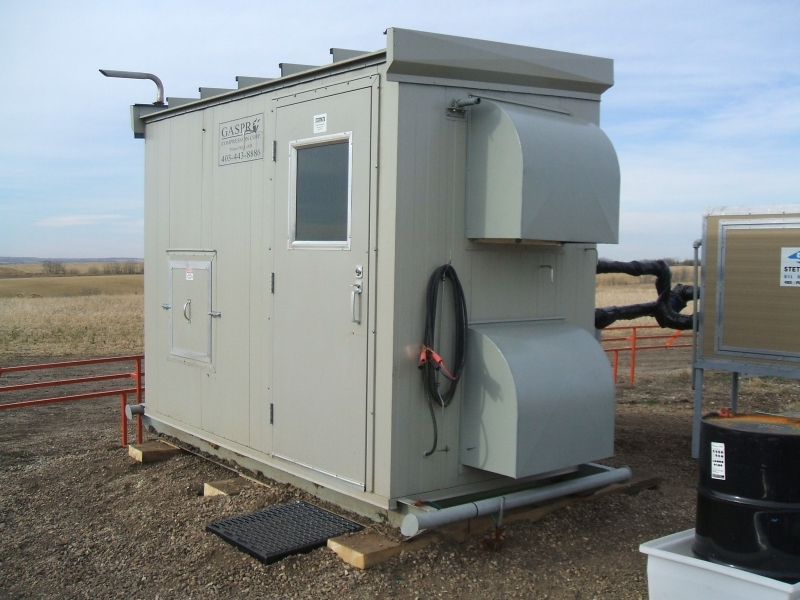
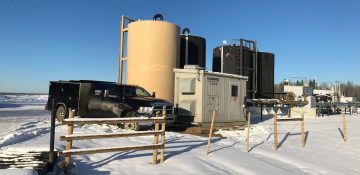
Crude oil storage tanks emit methane and other volatile organic compounds that flash off from the oil. Gaspro’s vapor recovery units (VRU) are designed to recover the vapors coming off from the tanks (typically at only a few ounces of pressure) and then compressing it back into the system where it can be marketed. The VRU can provide significant economic and environmental benefits to the client.
Gaspro Compression provides a simple solution to these emissions and vented gases by applying a closed loop system without the need of having costly emission study. Gaspro VRUs can be used at any application including tanks where methane gas is coming off in small amounts. We capture these trace amount of gases, compress it and put it back into the gas pipeline which increase profitability and reduce methane (and GHG) emissions making it a more sustainable solution.
In Alberta, Steam assisted gravity drainage (SAGD) is commonly used to extract in situ deposits of Heavy Oil. Solvent extraction technologies are being tested as an alternative to SAGD, whereby, solvents will be used instead of steam. Gaspro has provided compressors for recovery of propane solvent and butane solvent pilot projects.
Benzene is a carcinogenic (cancer causing) compound that is a by-product of natural gas dehydration systems using glycol as a desiccant. Gaspro offers various control systems that can significantly reduce (using a condenser box or a condenser + tank assembly) or completely eliminate (using Gaspro’s BTEX VRU) emissions of benzene and other harmful compounds into the atmosphere.
Gaspro BTEX VRU provides a solution to the system where benzene emissions are a concern. Typically, glycol dehydrators are required to capture small amounts of BTEX, greenhouse gases (GHGs) and volatile organic compounds (VOCs) in order to meet the regulatory requirement. Our BTEX VRUs capture emissions from the still-column of the glycol dehydrator, condense it to collect all the liquid droplets and pass the separated gas into the compressor. Gaspro BTEX VRU applies a closed loop system and is approved technological solution by the AER as a 100% solution to the problem, thus eliminating the need for further study requirement as is required by other 95% OR 99% solutions.
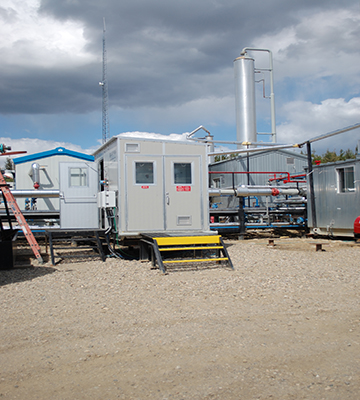
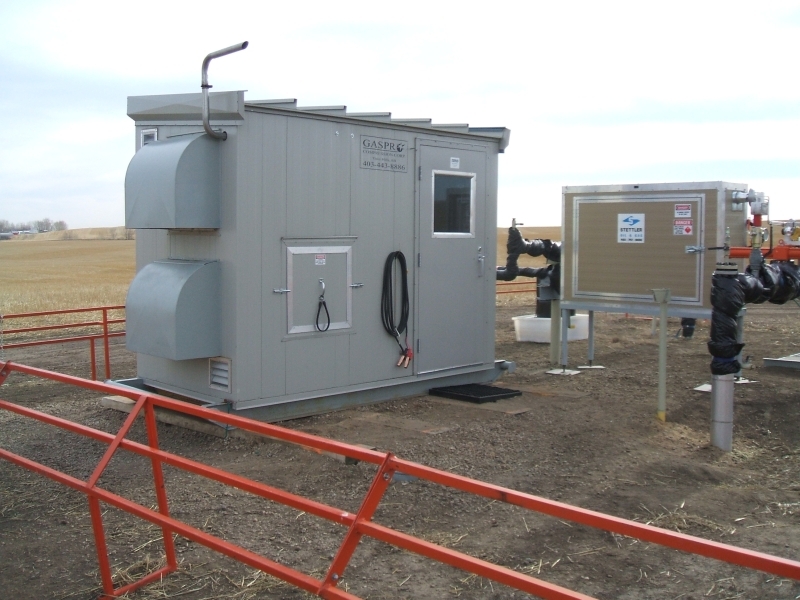
Gaspro booster compressors are used in facilities or natural pipelines where natural gas is required to move at a distant location. The gas is first compressed to a high pressure and is then allowed to move into a high-pressure gas line. Because of this compression, gas moves from a high-pressure location to a low pressure distant location.
Gaspro compressors have been extensively used for depleting coal bed methane (CBM) and other conventional natural gas wells. By helping boost these low pressure formations into the pipelines, allowing formations to be depleted to as near zero pressure as possible.
Gaspro’s Hydraulic Multiphase Pump package is an industry-leading technology, with the unique ability to boost both gas and liquids in a single process.
Multiphase pumping has received recognition in supporting oil and gas production optimization from assets where it was previously impossible. Multiphase pumping allows the entire production stream to be gathered and boosted to a central facility without separate flowlines, separators, treaters, storage tanks, flares, compressors, etc. Eliminating this surface equipment at the well site reduces facility operating expenditures, as well as equipment costs, and provides optimization spread over many wells. A multiphase pump skid can be installed on a gathering system with little or no production disturbance.
Gaspro’s Hydraulic Multiphase pump is self-supported with automatic speed control, instrumentation, and safety shutdowns. Comes with standard communication protocols, data acquisition for real time monitoring, and remote start/stop capabilities.
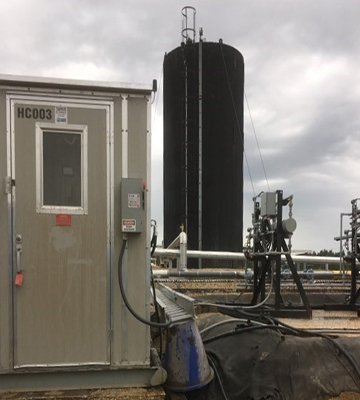
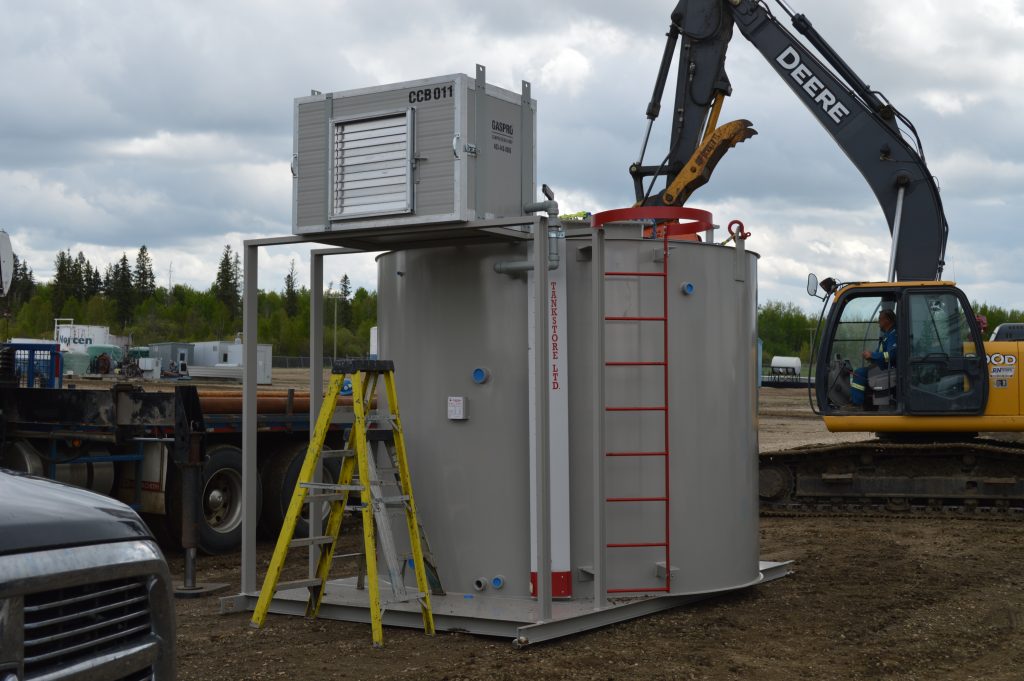
Gaspro’s Cooler Boxes Removes H2O from BTEX gases by cooling gas and allowing H20 to condense out and be captured in a tank. Gases can be recovered and reused for re-boiler fuel; this increases the quality of the fuel thereby increasing the efficiency of the re-boiler.
Quickly and easily installed, Minimal onsite requirement for install
Self-contained, all electronics mounted inside skid for ease of transport and installing as well as protection from elements
Built temperature control, uses RTD for temperature control with a user defined set point
GasPro Compression builds equipment for six main applications: casing gas compression, vapor recovery from storage tanks and solvent projects, BTEX emission control at glycol dehydrators, booster compression, hydraulic multiphase pumping and BTEX cooling. These cover conventional oil and gas production, heavy oil, coal bed methane and natural gas dehydration facilities.
A casing gas compressor draws associated gas off the well casing, compresses it and sends it back into the production line. With less back pressure on the formation, more oil and gas flows into the wellbore. GasPro Compression casing gas packages are sized for individual wells, so each well can be optimized on its own.
Venting and flaring casing gas creates greenhouse gas emissions and burns off energy that could be sold. Compressing the gas back into the production line keeps that volume as revenue and avoids the emissions. A GasPro Compression casing gas package turns a waste stream into saleable product.
Crude oil storage tanks give off vapors at only a few ounces of pressure, which is too low to flow into a sales line by themselves. A tank vapor recovery unit (VRU) captures those vapors and compresses them back into the system for sale. GasPro Compression builds tank VRUs for producers who want to stop tank venting and recover gas they are currently losing.
Yes. GasPro Compression has supplied compressors for propane and butane solvent pilot projects, which are being developed as alternatives to steam-assisted gravity drainage (SAGD) for heavy oil. Solvent VRUs recover the solvent vapors so they can be reused in the process.
Glycol dehydration removes water from natural gas, and during regeneration the glycol releases benzene, toluene, ethylbenzene and xylene (BTEX). Benzene is the main concern. If nothing is installed to capture these vapors, they go straight to atmosphere, which is why dehydrators need a BTEX control system.
A condenser box, or a condenser combined with a tank, cools the still column vapors and reduces BTEX emissions, but some vapors are still released. A GasPro Compression BTEX VRU captures the vapors and compresses them back into the process, which eliminates the emissions instead of only reducing them. Producers who need full control should choose the VRU.
A BTEX cooler chills the BTEX gas stream so the water in it condenses and collects in a tank. The dried gas can then be used as reboiler fuel, which gives better-quality fuel and improves reboiler efficiency. The GasPro Compression BTEX cooler comes as a self-contained skid with the electronics built in, installs quickly and controls temperature with an RTD to a set point the user chooses.
A booster compressor is needed when gas doesn’t have enough pressure to flow into a higher-pressure gathering line or pipeline. GasPro Compression booster packages raise the gas to the line pressure, so production keeps moving even after the reservoir pressure has dropped.
The right choice depends on where your gas comes from, what pressure it is at and where it needs to go. Casing gas, tank vapors, dehydrator emissions and low-pressure wells each call for a different package. Send your site details to GasPro Compression through our compressor, BTEX or rentals inquiry forms and our team will recommend a configuration. Many applications are also available as rentals if you want to test before you buy.