
Home » Applications » Vapor Recovery Units
A vapor recovery unit (VRU) is a specialized gas compression system designed to capture low-pressure vapors from oil tanks, storage facilities, and other upstream production assets. These vapors are typically rich in methane and volatile organic compounds (VOCs), which, if not recovered, are either flared or vented – leading to revenue loss and environmental impact.
Gas Pro’s VRU systems are engineered to recover, compress, and reintegrate these vapors into your gas infrastructure, increasing operational profitability while supporting emissions reduction goals.
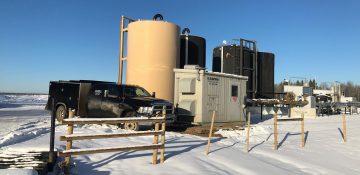
Crude oil storage tanks and other surface facilities naturally emit hydrocarbon vapors. These vapors “flash off” due to temperature and pressure changes, especially during tank filling and agitation. Without vapor recovery units, these gases are either flared (wasting potential revenue) or vented (increasing environmental liability).
With rising regulatory pressure across Alberta and Western Canada to control fugitive methane emissions, vapor recovery units have become essential components in any responsible production operation.
Gas Pro’s vapor recovery units operate as closed-loop systems designed to capture low-pressure vapors from tanks and compress them back into the processing system or pipeline. Typical applications operate at only a few ounces of pressure, requiring specialized equipment designed for sensitivity and reliability.
Our VRUs are custom-engineered to meet your site’s specific gas composition, flow rate, and operating conditions.
Benefits of Gas Pro VRUs:
Tank vapors are among the most common sources of lost gas in upstream operations. Gas Pro’s tank vapor recovery units are built to operate in low-pressure conditions – capturing vapors directly from atmospheric or near-atmospheric tanks.
These VRU systems help producers:
Whether you’re managing sweet or sour gas, Gas Pro designs VRUs that can handle a variety of hydrocarbon streams safely and efficiently.
In Alberta’s in situ heavy oil operations, Steam Assisted Gravity Drainage (SAGD) has long been the dominant extraction method. However, newer solvent-based approaches are emerging as cost-effective, low-emission alternatives. These methods use propane or butane to replace steam, reducing water usage and greenhouse gas emissions.
Gas Pro has engineered custom VRUs for pilot solvent recovery projects – capturing and compressing propane and butane vapors for reinjection or reuse.
Applications include:
Absolutely. Our team specializes in designing site-specific systems. We evaluate pressure, gas composition, flow rates, and temperature to deliver a VRU that performs reliably and efficiently under your unique operating conditions.