
A compressor package that no longer fits your current well conditions doesn’t have to be replaced outright. As reservoir pressures decline, production profiles shift, and emissions regulations tighten, the equipment you installed years ago can often be reconfigured to match today’s requirements, saving both time and capital compared to a full new build. GasPro Compression specializes in modifying and retrofitting existing compressor packages so operators get more life, and more value, out of the equipment already on site.

Modifications we commonly carry out include:
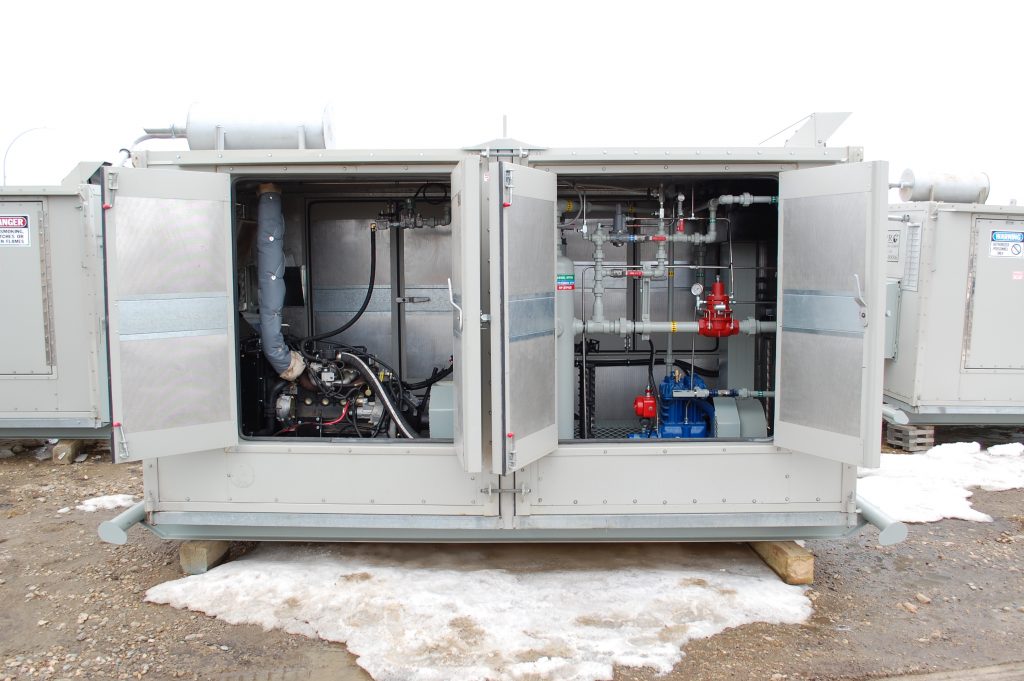
  • Casing gas to VRU conversion – re-engineering a compressor originally sized for casing gas duty to capture low-pressure vapors from storage tanks instead, helping operators meet emissions targets while recovering saleable product that would otherwise be flared or vented
  • Compressor style change – swapping a reciprocating unit, rotary vane compressor, hydraulic unit, or blower for a style better suited to a well’s current flow rates, pressures, and gas composition as it performs today, rather than when the package was first commissioned
  • Gas drive to electric drive conversion – refitting a gas drive engine with an electric motor and, where needed, variable frequency drive (VFD) control, to cut fuel-gas consumption, lower noise at the site, and simplify remote monitoring
Modifications to Existing Units

Why Modify Instead of Replace

Reusing an existing package rather than commissioning a new build gives operators several advantages:
  • Lower capital cost than purchasing a full new compressor package
  • Faster turnaround, since the frame, engine, or major components are already in place
  • Reduced emissions and lower operating costs, particularly with VRU and electric drive conversions
  • Extended working life for equipment that would otherwise sit idle or be scrapped
  • Equipment matched to current well performance rather than conditions from years ago
  • One point of contact for engineering, fabrication, and ongoing service on the modified unit

Our Modification Process

  1. Field or shop assessment of the existing package’s condition, current flow data, and site requirements
  2. Engineering review to confirm the unit can safely and reliably perform its new role
  3. Fabrication and conversion, including new cylinders, drive trains, piping, or control panels as needed
  4. Testing and certification before the package is returned to service
  5. Ongoing servicing and parts support once the modified unit is back in the field 

Because GasPro builds, services, and stocks parts for the compressor packages we work on, modifications are handled in-house from initial assessment through commissioning, without coordinating between multiple vendors.

If you have a compressor package that’s no longer matched to your well’s current needs, GasPro Compression can assess whether a modification makes more sense than a replacement. Contact our team to talk through your site’s current performance and what a retrofit could look like for your operation.

Frequently Asked Questions

Most casing gas packages can be evaluated for VRU conversion, but suitability depends on the existing compressor’s design, its current condition, and the vapor volumes and pressures at your tank battery. Our team reviews your site data first to confirm a conversion will perform reliably before any work begins.

In many cases, yes. Reusing a compressor’s frame, engine, or major components and re-engineering it for a new duty typically costs less than a full new build, particularly when the existing equipment is in good mechanical condition. We’ll walk you through the cost comparison for your specific unit so you can decide what makes sense.

The conversion replaces the internal combustion engine with an electric motor sized to the compressor’s horsepower needs, along with any required drive train, coupling, and control panel changes. If you’re adding VFD control, we also configure the panel for variable-speed operation. Sites need either grid power or a generator to support the new drive.

Timelines vary with the scope of work. A compressor style change or drive conversion on a package already at our shop can often be completed in days to a couple of weeks, while more involved VRU conversions with new piping and controls may take longer. We’ll give you a realistic timeline once we’ve assessed the unit.

Yes. All modifications go through an engineering review and testing before the unit returns to service, and control panels are built to the same certified standards as our new builds. Any changes affecting emissions performance, such as a VRU conversion, are configured to meet the applicable regulatory requirements for your site.

Both. Smaller changes, like control panel updates or component swaps, can often be done on-site, while more extensive conversions such as changing compressor style or drive type are usually completed at our facility in Three Hills, Alberta, where our fabrication and testing equipment is on hand.